Club Night Report
Wednesday 11th March 2026
Club Night Photos for Wednesday 11th March 2026 - Guest Demonstrator: Les Thorne
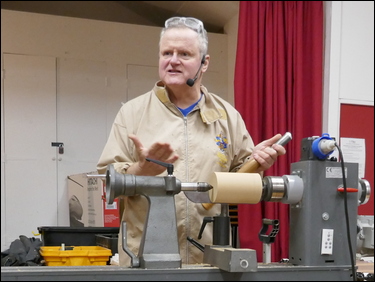
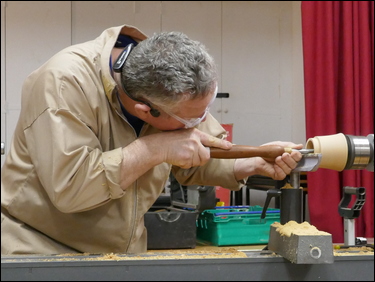
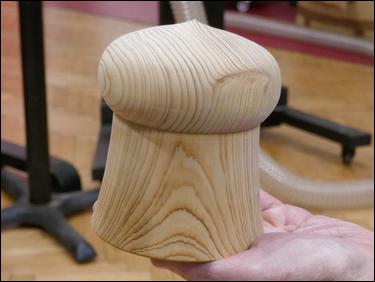
The demonstrator for the March 2026 meeting was the welcome return of a long-term favourite Les Thorne (see website: www.noturningback.co.uk ), who last visited us in February 2025.Tonight's demonstration was the making of a Minaret Box - in Cedar of Lebanon (aka Sandalwood). The making of this box would show all of the cuts used in woodturning! Stating that 'speed is your friend' - until the wood falls off the lathe! - Les said that you should turn as fast as possible within your own comfort zone.
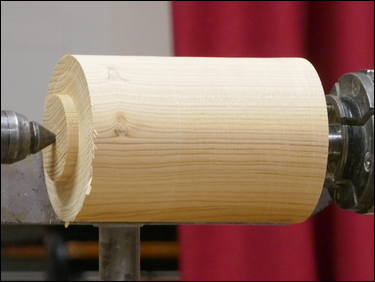
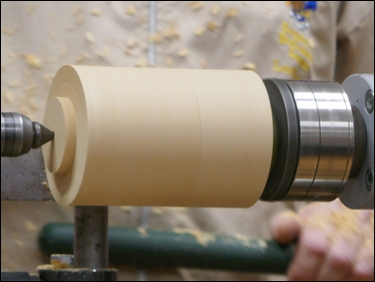
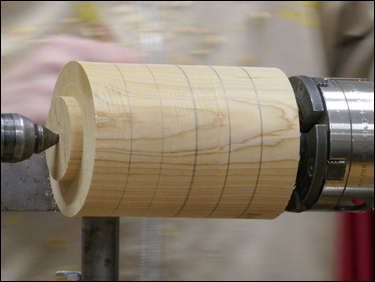
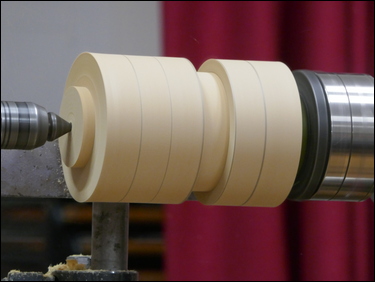
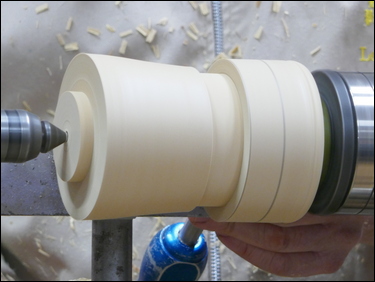
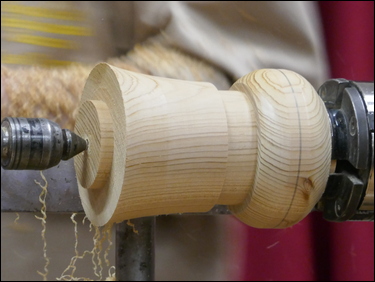
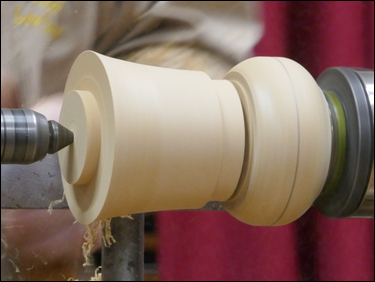
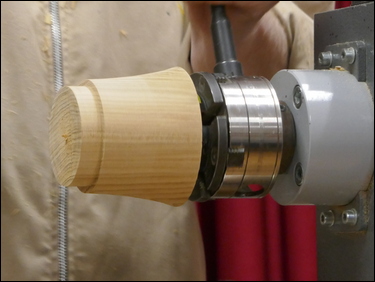
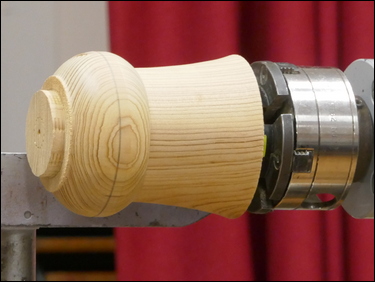
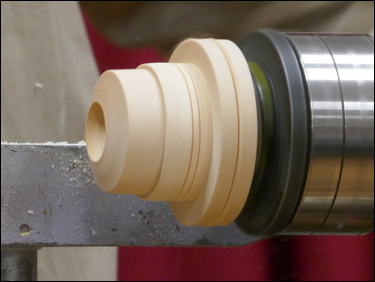
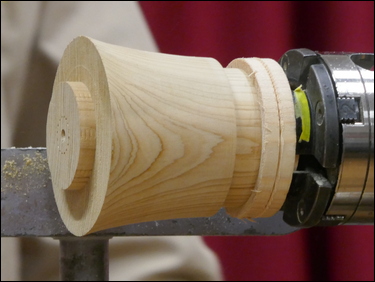
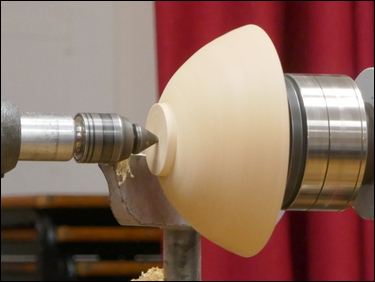
He started by holding the blank (approx. 3 ½" diameter by 7" long) between centres and driven by a Steb drive held in a 4-jaw chuck. The part was turned to round using a spindle roughing gouge - Les specified 'unravelling the wood' - cutting the wood how it likes to be cut(?) - present the tool correctly - and use all of the gouges cutting edge. He showed using a skew chisel (there is a lot more bevel contact) on the turned cylinder to get 'curly' shavings. A spigot was turned at the tailstock end and then held in the chuck. Another spigot was then turned at the tailstock end. The box would have a 2 fifths lid to a 3 fifths base - so the cylinder was marked out into 6 equals widths. The central section was turned down to what would be the box 'joining' tenon - and the box was turned to shape - and parted off - to leave a small 'witness' (tenon) diameter on the lid.
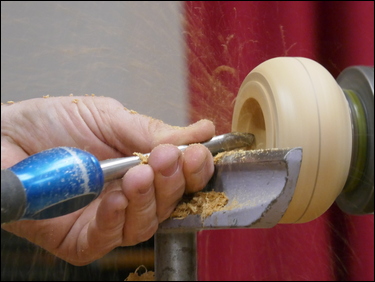
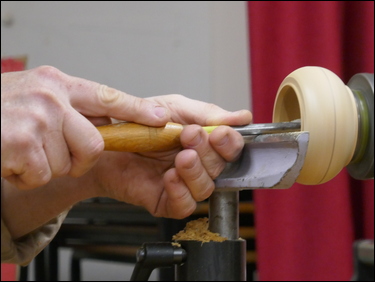
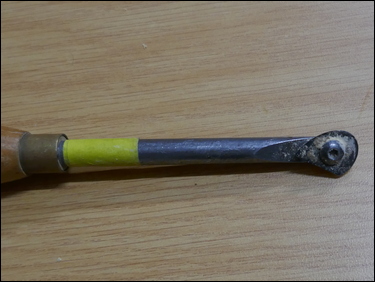
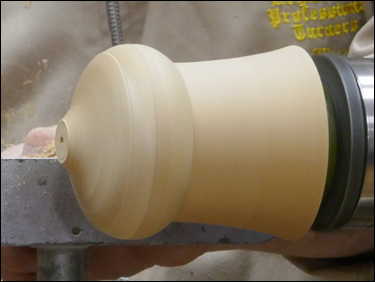
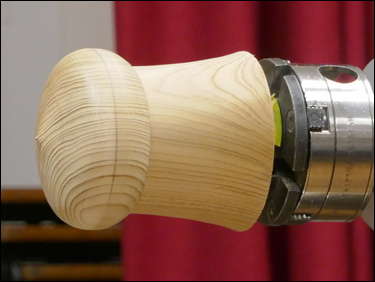
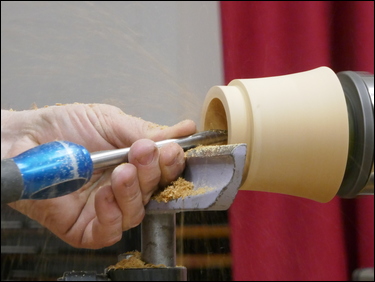
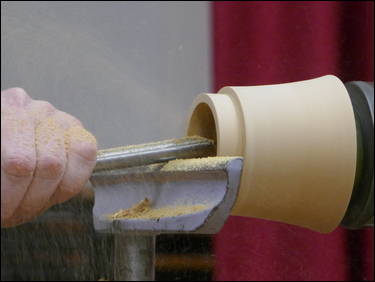
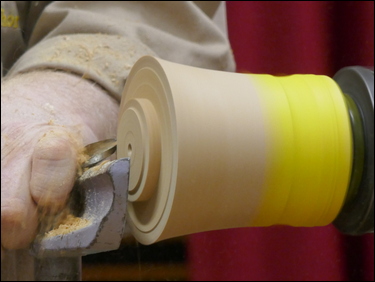
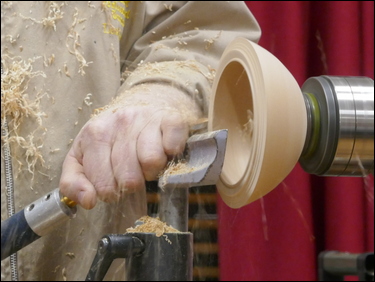
The lid was hollowed (end grain hollowing) - using a spindle gouge - working with the grain, from the centre outwards - and finally cleaned up with a 'teardrop' shaped scraper. Using his 'signature' round multi-purpose tool Les adjusted the fit in the lid to produce a tight fit on the base. The base was then mounted in the chuck - and the lid was then fitted to it. The lid was finish turned to shape, and sanded.
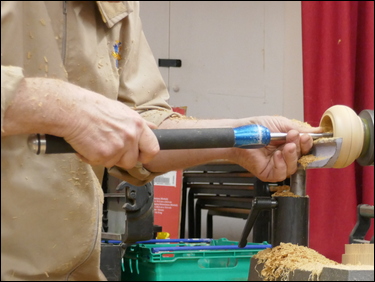
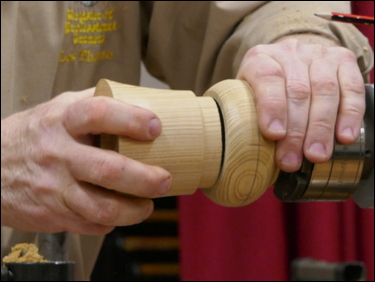
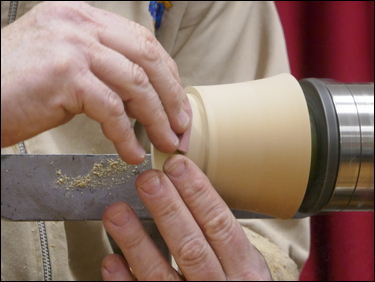
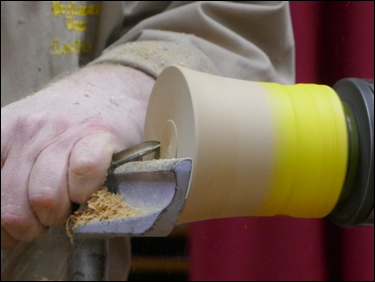
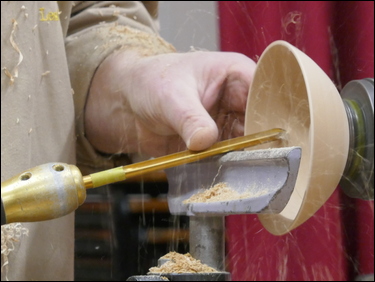
The lid was removed and the base was hollowed - initially with a spindle gouge, followed by a hollowing tool - to achieve a flat bottom and straight sides. The tenon diameter was adjusted (sandpaper) to produce the 'classic' suction fit with the lid.
A piece of scrap timber was held in the chuck - and turned to be a tight-fitting jam chuck for the base - some 'safety' masking tape was applied to the join between the base and the jam chuck. The bottom of the box base was finish turned slightly concave. Les said that he would probably use an oil finish on the box.
Les stated that his second demonstration was going to show how his multi-purpose tool could be used to judge the wall thickness of a bowl. There were some furrowed brows (of disbelief?) in the audience.
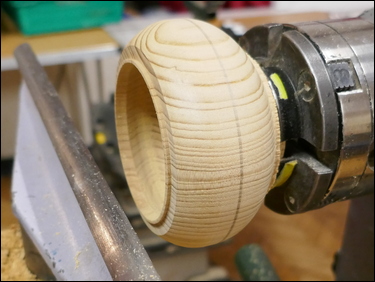
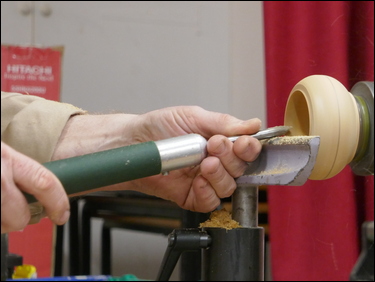
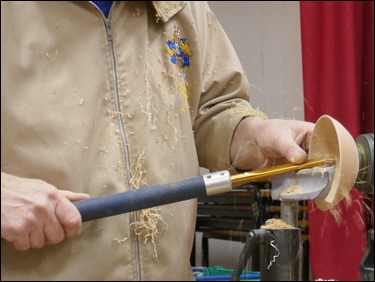
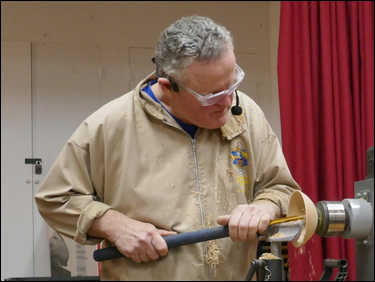
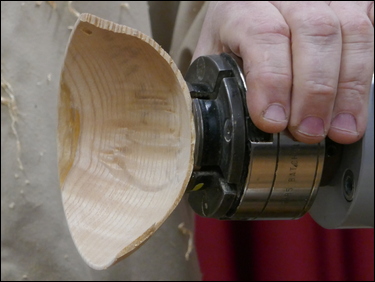
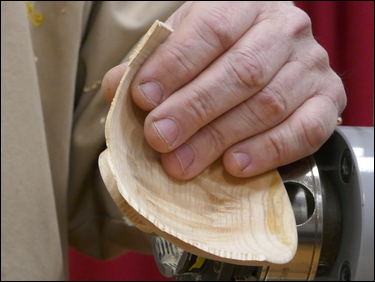
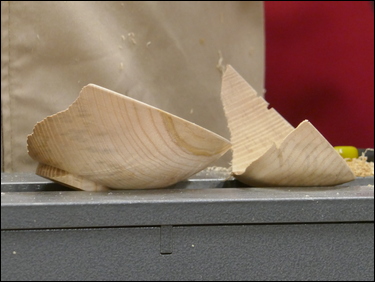
A previously part-turned bowl was mounted on a driving pommel held in the chuck and supported by the tailstock - to enable the holding spigot and the outside shape of the bowl to the cleaned up. The bowl was then held in the chuck. Les then proceeded to turn the wall thickness to be 'very thin' - using a bowl gouge and his left hand to support the wall as it was turned. He then picked up his multi-purpose tool and declared that this is how it can be used to judge the wall thickness - by giving the bowl an almighty whack (surprise, shock, awe, horror in the audience!) - breaking it neatly into two pieces. Yes - it did show Les's skill at turning a thin, constant wall thickness bowl using his 'fingers' as calipers. It was an impressive and entertaining demonstration of his skills. An alternative technique is just to cut the bowl in two on the bandsaw to examine the wall thickness.
Once again, Les treated us to a wide-ranging demonstration, showing precise tool control, with plenty of audience participation, questions and answers, hints, tips, and techniques. An entertaining (mildly shocking?), engaging and informative evening.
Thank you, Les!
 |
 |
 |
 |
 |
 |
 |
 |
 |
 |
 |
 |
 |
 |
 |
 |
 |
 |
 |
 |
 |
 |
 |
 |
 |
 |
 |
 |
 |
 |
 |
 |
 |
 |
 |
 |
The Display Table was well supported and showed a number of interesting items...
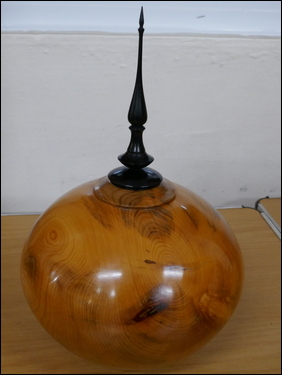
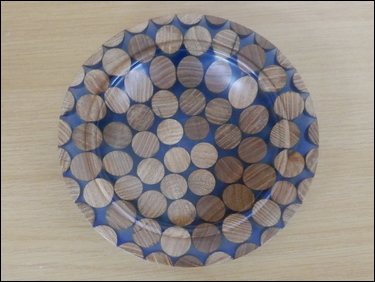
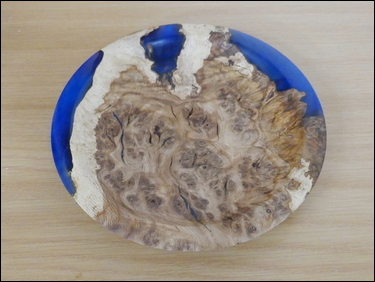
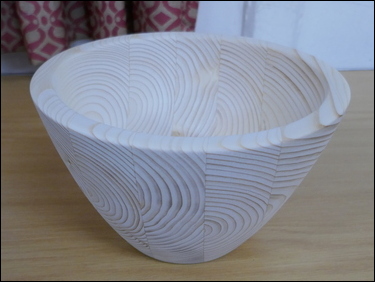
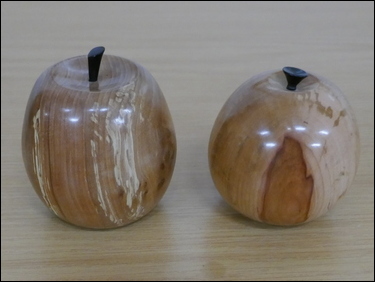
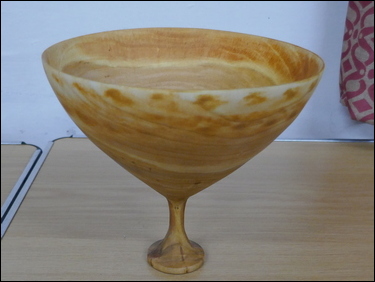
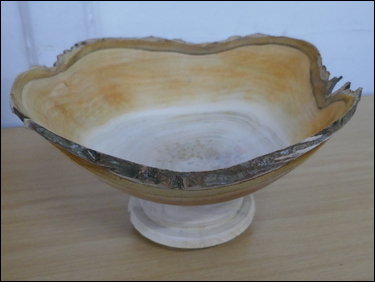
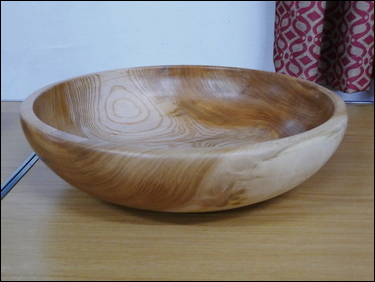
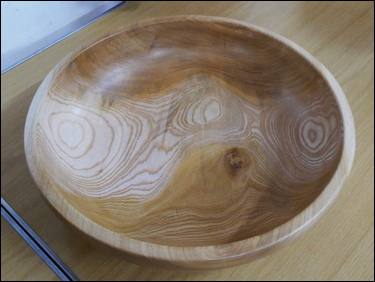
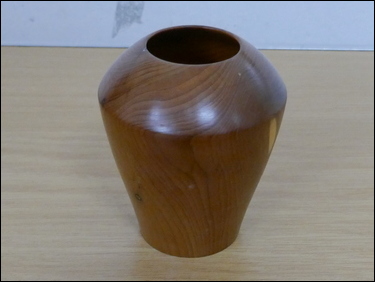
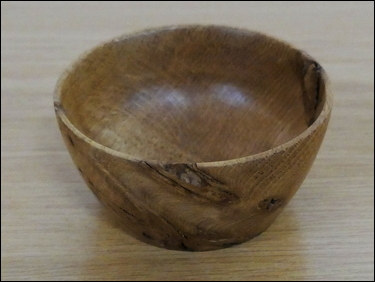
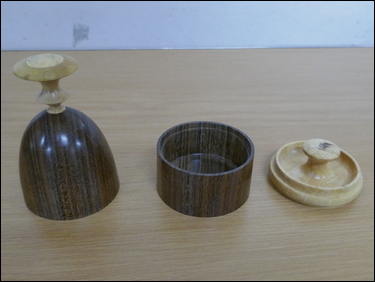
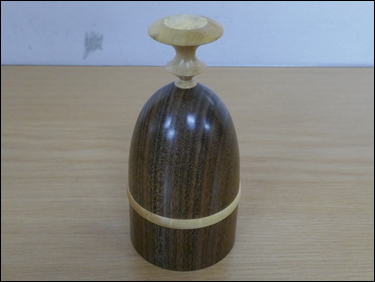
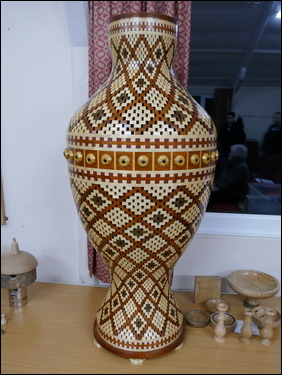
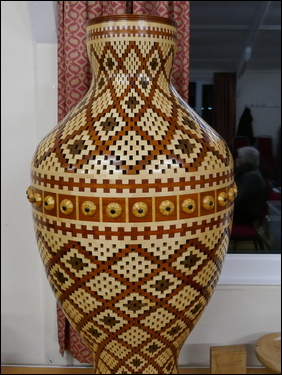
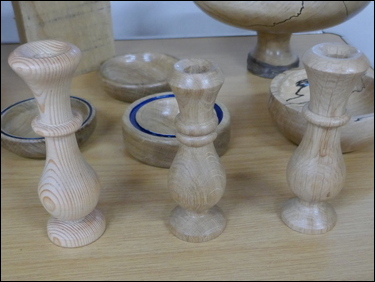
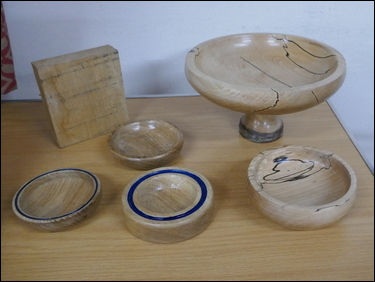
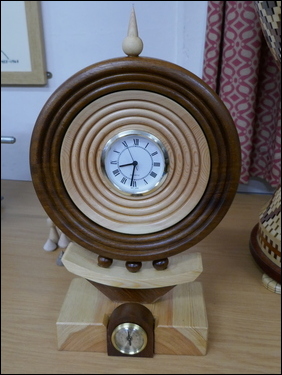
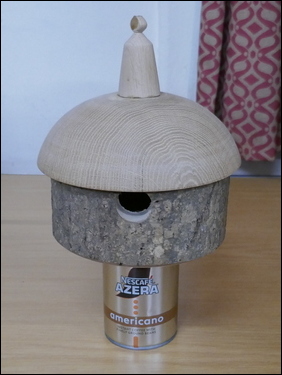
Tim Mortimer presented a large blue stained vase in sycamore, finished with acrylic lacquer purchased from Aldi - it produced an excellent result. Also, a large yew hollow form with a blackwood finial and an oiled finish. Dave Branscombe presented three items - a small platter with multiple wooden inserts, set in a blue casting resin - and turned. A large burr oak platter with a blue resin casting to replace some missing timber and a part-finished pine laminated bowl which was showing some interesting grain patterns. Martin Barrett also showed three items - two apples made in apple wood that were hollowed out to be salt shakers and two wet cherry, 'goblet' shaped, thin wall bowls - the one with the natural bark-on edge was unfinished. Don Webster displayed a very large Scottish wych elm, shallow fruit bowl, finished with sanding sealer and Woodwax 22. John Lockhart showed a small yew vase that was his first attempt at hollowing with a Simon Hope hollowing tool and a small thin-walled burr oak bowl. Frans Brown displayed a three-part box in African ovangkol timber with a boxwood inner tray and finial. Roger Hoare presented a huge segmented urn containing several thousand individual pieces of sycamore, purpleheart, blackwood, pau amarello, yew and mahogany - a lot of work and a great result. John Theobald displayed a bunch of practice pieces - some bud vases and small bowls made in ash from his firewood pile and a large spalted beech pedestal dish. Finally, two items from Paul Kohn - a large multi-component clock on a stand, with a finial and a barometer in the base. And a rustic bird box made in ash.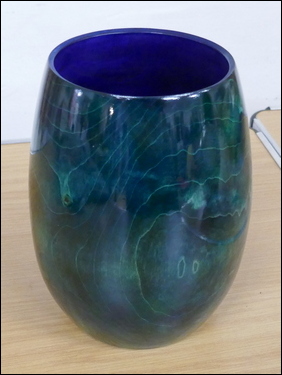 |
 |
 |
 |
 |
 |
 |
 |
 |
 |
 |
 |
 |
 |
 |
 |
 |
 |
 |
 |