Club Night Report
Wednesday 8th April 2026
Club Night Photos for Wednesday 8th April 2026 - Club Demonstrator: Dave Branscombe
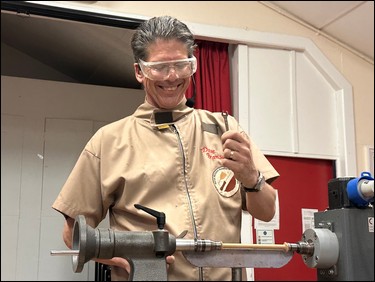
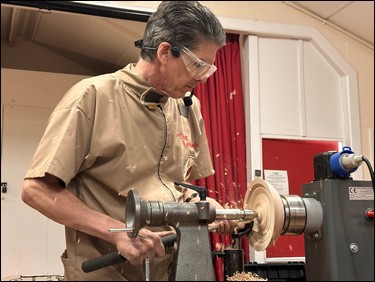
Observations and photographs by Arthur KingdonThis was a welcome return of our member Dave Branscombe. He first demonstrated to the club in 2019 and apart from the lockdown years of 2020 and 2021 he has demonstrated every year since. Counting up, this was his sixth demonstration and he has certainly gone from strength to strength.
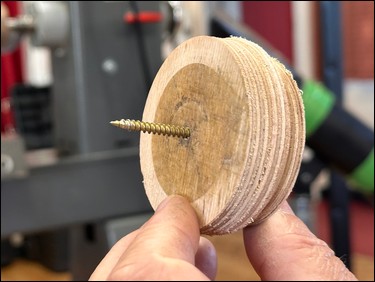
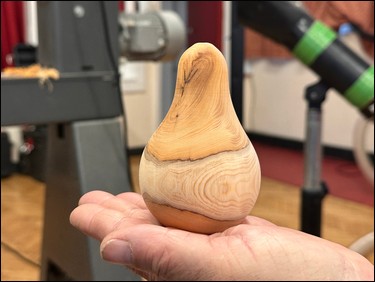
Tonight, it was fruit and bowl time; starting off with a pear made from a yew branch. Dave had intended to use his Axminster screw chuck but he had managed to snap it the previous weekend, suggesting they are not as strong as they look. However, he made his own version using a smaller screw that suited the turning of fruit.
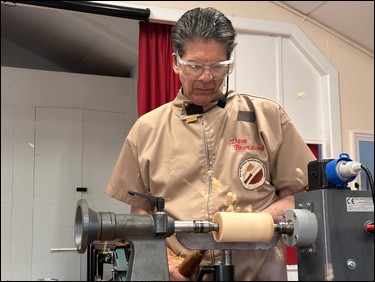
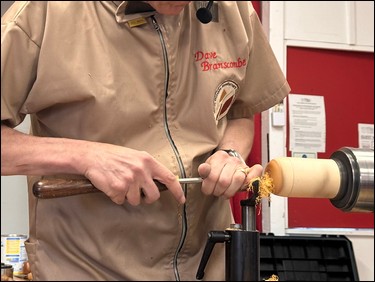
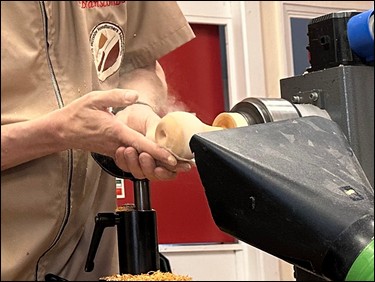
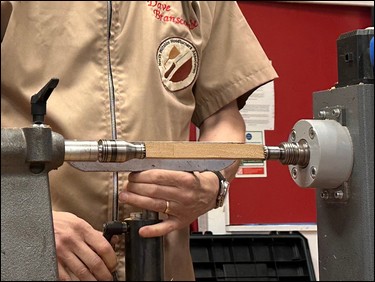
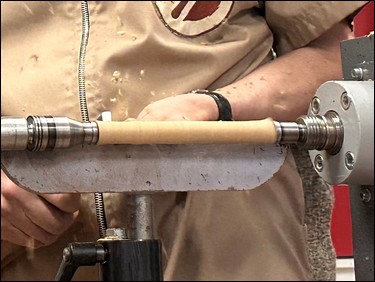
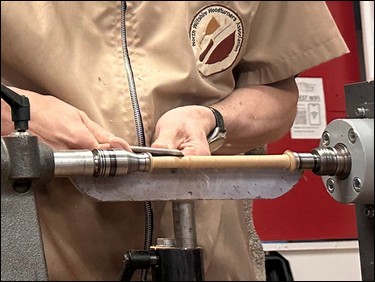
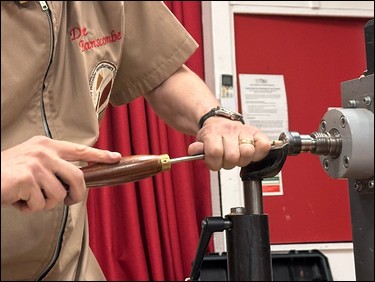
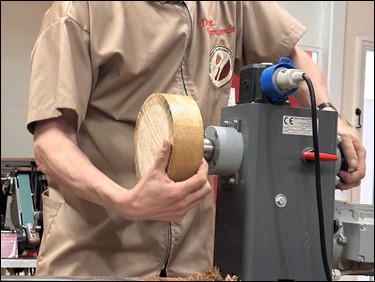
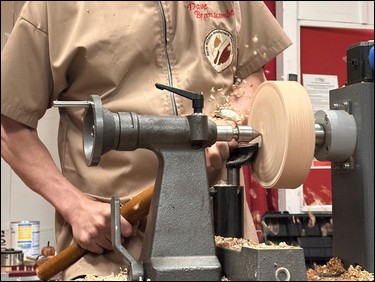
The yew was quickly turned to a cylinder using a spindle roughing gouge and, as you would expect from Dave, it was very sharp tool. He then used a skew to refine the cylinder and get a very smooth surface. Dave recommended always doing this exercise to get practice in using the skew. He referred to this as a 'woodturning warm up'. One of the guests tonight was very new to turning so Dave explained every step in detail. This was much appreciated by the guest and he has subsequently joined.
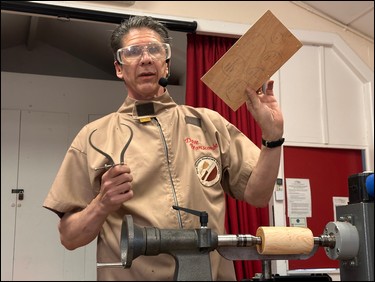
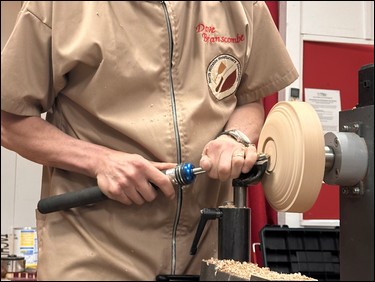
The next step was to create a tenon to suit the chuck jaws. Dave had made a board, which showed the sizes required for all his chucks. It was simple job to create a tenon using a parting tool to suit the gripper jaws he was using.
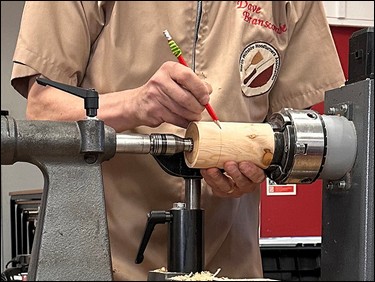
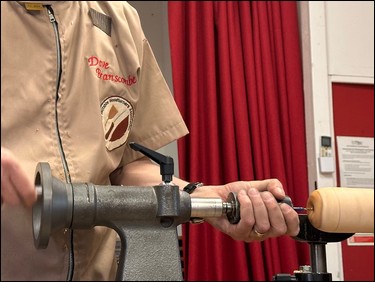
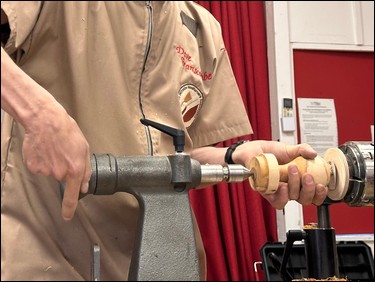
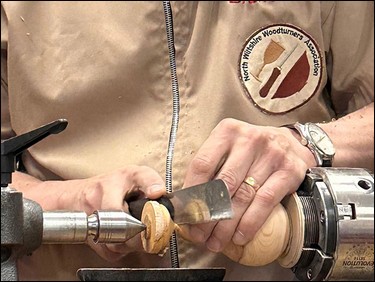
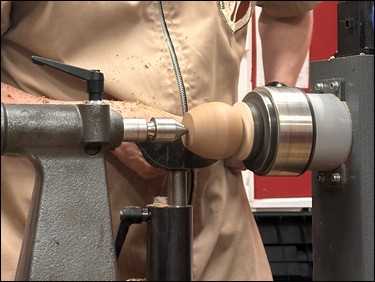
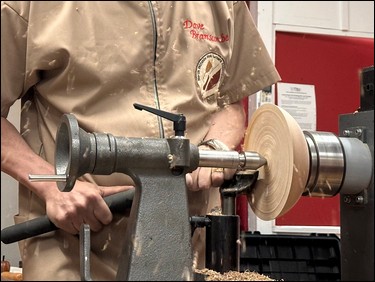
With the work in the gripper jaws, Dave brought up the tailstock, which had a revolving Steb centre. He feels these centres allow for more adjustment than a single point centre. He proceeded to mark out a rough pear shape, stressing that it did not need to be too accurate, 'pear shaped' would do.
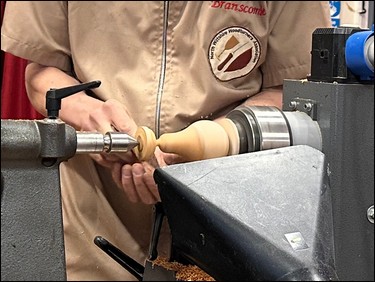
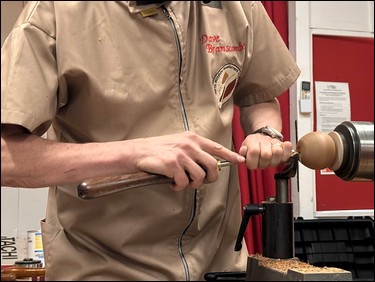
The curved shape was created using a spindle gouge. Dave stressed how the bevel should rub and the tool handle held against the body for much of the shaping of the curves. However, movement of the handle away from the body would be needed to complete the curve and that is fine as long as the bevel continues to rub. Dave recommended practicing both left and right-handed cutting.
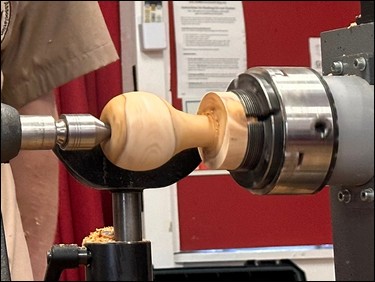
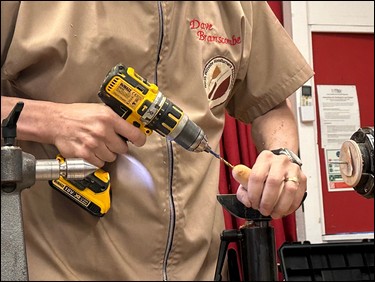
A 4 mm hole was drilled in the end to accept the screw chuck. The Steb centre was removed and a cone centre placed in the tailstock for support while the rest of the shaping was carried out using a spindle gouge.
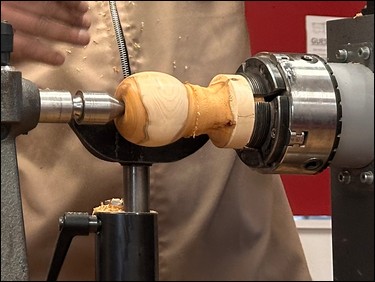
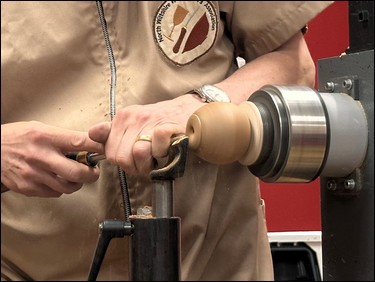
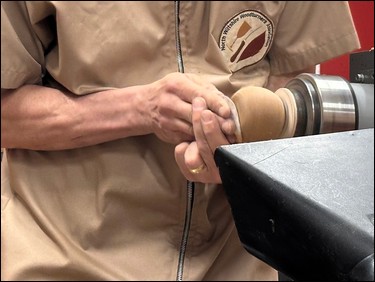
After some sanding to 320 grit, the work was then removed from the chuck jaws and the screw chuck was fitted in the jaws. The work was then carefully screwed on, using the tailstock to align. There was only a final small amount of wood to remove, then it was a bit of sanding and it was sawn off. The top was then drilled to accept the stalk.
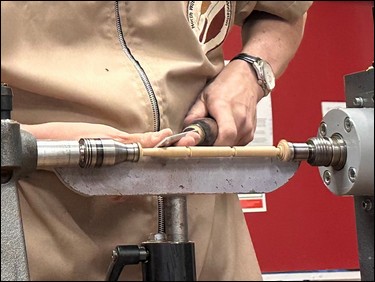
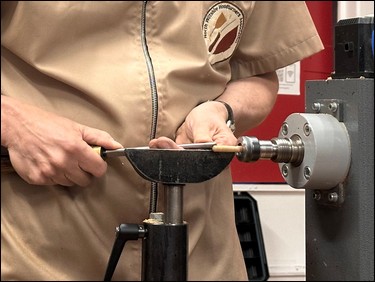
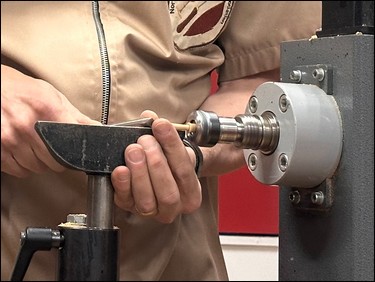
There are a variety of ways to create a stalk and a calyx (the bit in the bottom) e.g. twigs, cloves etc. However, Dave prefers to make his from wood. Using an 8 mm piece of oak spindle, he turned it down to 5 mm using a skew chisel and supporting the work as it got smaller. Final sizing gauged with a 5 mm spanner!
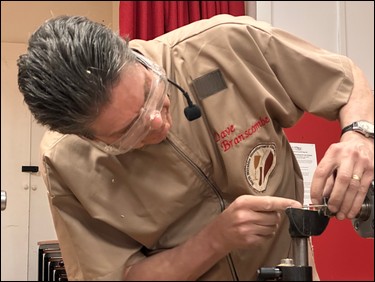
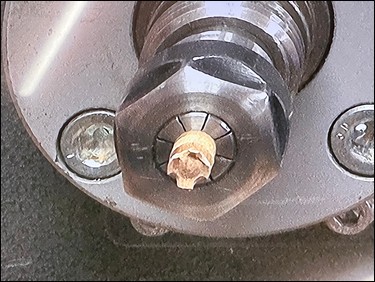
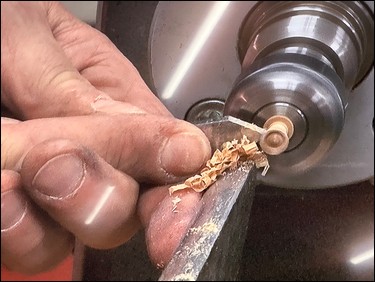
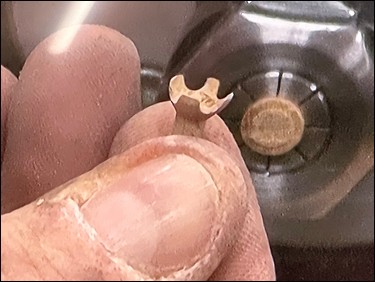
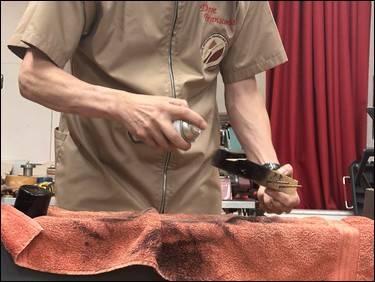
The 5 mm spindle was then cut into short lengths which were held in an ER20 collet chuck. Further thinning into a tapered shape created the stalk. The Calyx was rather more complicated, requiring a dome shaped recess with a rolled bead and then filed to make four coves. After parting off, they were inserted into a board with predrilled holes to hold them while they were sprayed black.
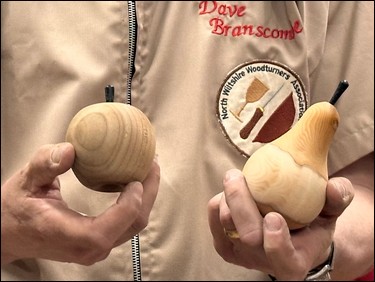
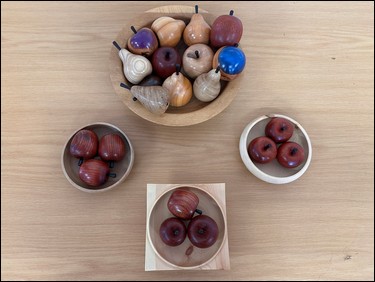
After the refreshment break, it was the turn of the apple. This was created from a piece of elm, using similar techniques to how the pear was created. All done by eye. With the paint now dried, the stalk and calyx could now be inserted into both. A very pleasing result. The photos speak for themselves.
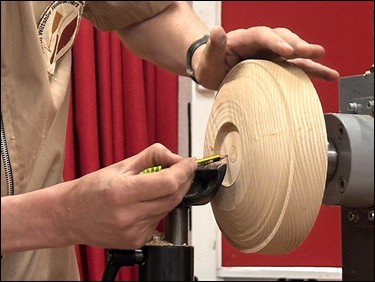
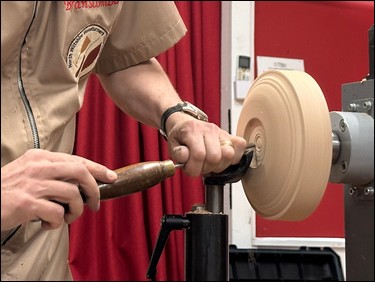
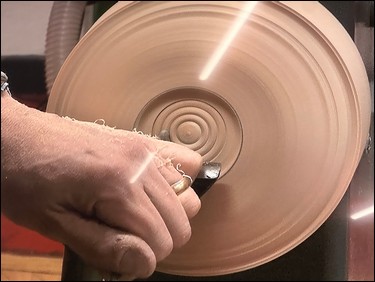
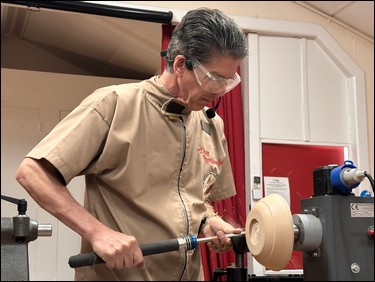
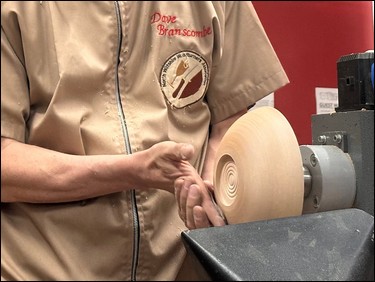
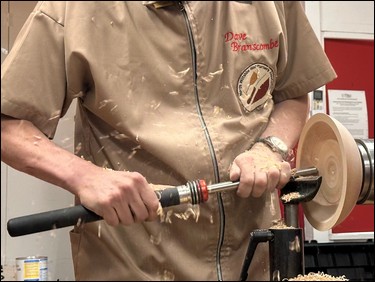
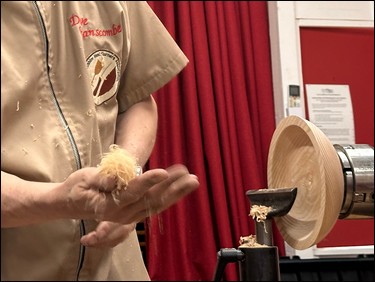
With the fruit completed it was on to the bowl. An ash blank was screwed on to an 8 mm screw chuck. The blank was trued using a bowl gouge with a bevel rubbing cut. A dovetail recess was cut in the base to suit the 'C' jaws and was then decorated with several beads cut with a small spindle gouge. The outside shape was created using a bowl gouge with Dave demonstrating that the curve cannot always be completed with the tool next to the body. A bit of sanding and the outside was complete. The bowl was reversed and the 'C' jaws expanded into the recess. The interior of the bowl was excavated using Dave's favourite ½" bowl gouge and some very fine shavings were created. The result was a beautiful bowl that any turner would be proud of.
This was an excellent, flawless demonstration that was as good as many of the professional demonstrators that we have had. The tool control was excellent, the commentary was non-stop, all the basics were explained and safety aspects were highlighted.
Thank you Dave!
 |
 |
 |
 |
 |
 |
 |
 |
 |
 |
 |
 |
 |
 |
 |
 |
 |
 |
 |
 |
 |
 |
 |
 |
 |
 |
 |
 |
 |
 |
 |
 |
 |
 |
 |
 |
 |
 |
 |
 |
 |
 |
 |
 |
The Display Table was well supported and showed a number of interesting items...
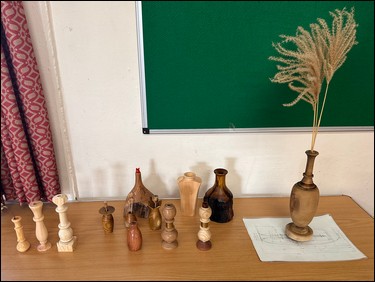
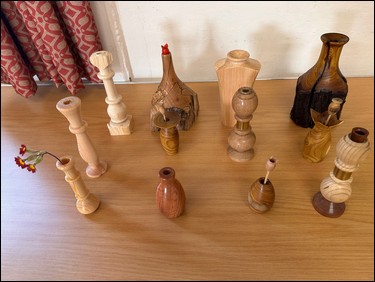
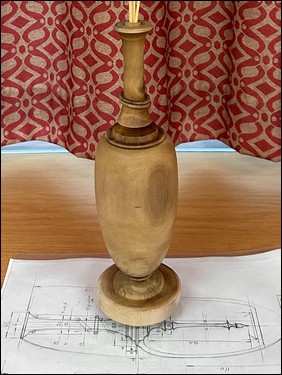
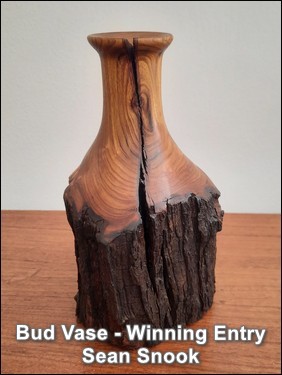
The display table included the entries into the competition with the theme of 'A Bud Vase'.There were a variety of interpretations of the theme, including a tall one by Graham Furze with a very detailed drawing.
The competition was judged by Frans Brown who declared the winning entry as that from Sean Snook - His Bud Vase was made from berberis and finished with 4 coats of Chestnut finishing oil.
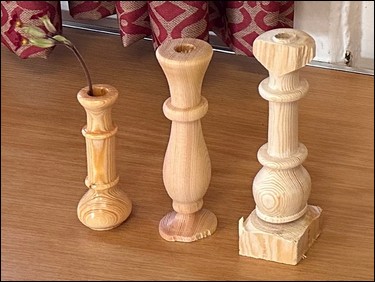
It was good to see three items from John Theobald, a novice turner, illustrating his 'challenges' along the way. Well done to all who entered.
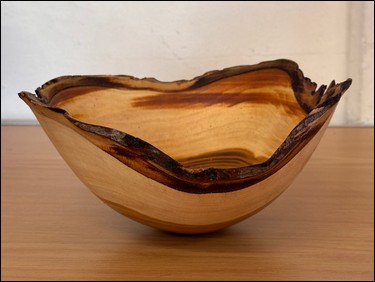
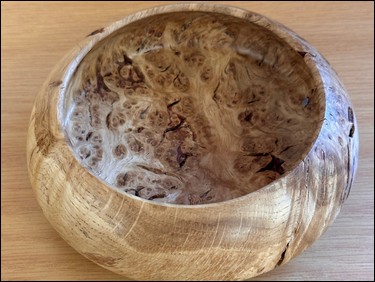
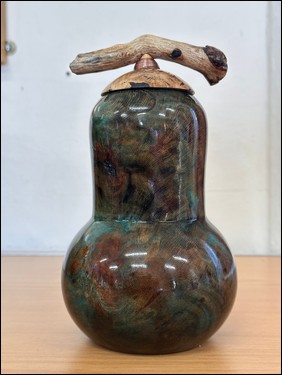
Martin Barrett showed a large, thin-walled cherry bowl which had been wet turned and exhibited very little cracking. John Lockhart showed a small bowl in burr oak. There were also several bowls of fruit turned by Dave Branscombe to support his demonstration. Frans Brown presented a large green stained, lidded container. The body was turned from London plane, treated with many colours and cut back between each colour, multiple layers of lacquer, the lid was made from burr oak holding a boxwood threaded insert with a copper wound pedestal supporting a driftwood branch found in Lulworth cove.
 |
 |
 |
 |
 |
 |
 |
 |
 |
|